
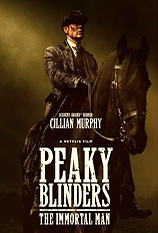
Peaky Blinders: The Immortal Man | 2026

- Locations |
- West Midlands;
- West Yorkshire;
- East Yorkshire;
- Cumbria;
- Merseyside;
- Manchester;
- Derbyshire;
- Cheshire;
- Wales;
- Oxfordshire
- DIRECTOR |
- Tom Harper
Find out exactly where the big screen spin-off from the TV series, famously set in the Birmingham area, was filmed on wide-ranging locations around the UK – what you can see and what you can't. Apart from the West Midlands, there's Bradford, Manchester, Merseyside, Cumbria, Cheshire, Derbyshire and even Oxfordshire and Wales. ▶ With UK map of locations at end of entry.
In fact, the production was based in Birmingham, at the Digbeth Loc. Studios in Digbeth just east of the city centre. This former industrial warehouse area is rapidly being developed as a vibrant arts district. You might have seen its streets in Steven Spielberg's 2018x Ready Player One where it stood in for 'Columbus, Ohio' of the future.
It doesn't matter if you haven't followed the TV series of Peaky Blinders, the backstory doesn't call for precise detail as Tommy Shelby, (Cillian Murphy) once leader of the Peaky Blinders gang, spends his retirement isolated in a decrepit mansion, haunted by ghosts of his violent past. This is almost literal as his house abuts the ruins of an old abbey and its cemetery. This location provides such a powerful image (although the gravestones were added for the production) that it comes as a bit of a surprise to find that it's genuine.
It's Calder Abbey House, an 18th century home built alongside the remnants the 12th century Calder Abbey at Calder Bridge, north of Seascale in Cumbria.
Despite its rundown appearance, this is a Grade I-listed building, privately owned and currently cared for by a team of volunteers. It is occasionally open for visits and, with interest in the film (and the location fee), there are plans for it to be reopened one day. You can keep up to date at Calder Abbey Facebook page.
It gets a little more complicated as there's actually a mix of locations to create the estate. To see the rest of it, we move from Cumbria to Derbyshire.

The outbuildings, stable yard and many interiors were filmed at the similarly-named but much grander Calke Abbey set in a 600-acre estate near Ticknall in Derbyshire. This is also Grade I-listed but managed by the National Trust.
It's also in a run-down state, with its peeling paintwork and overgrown courtyards, it tells the typical story of the decline of the English country house estate.
In Calke Abbey you can see the house's Schoolroom, which is where Tommy attempts to exorcise his past by writing his memoirs.
Back to the story. It's 1940 and in Germany the Nazis are hatching a plot to destroy the British economy by flooding the country with hundreds of millions of forged banknotes. The swastika-emblazoned train carrying the counterfeit money is seen leaving the railway sheds.

Far from 'Germany', this is the former Great Western Railway engine-shed and locomotive stabling point which has been converted into the Didcot Railway Centre, a rail museum and preservation site at Didcot in Oxfordshire.
The Centre also provided railway scenes for such period dramas as Guy Ritchie's Sherlock Holmes: A Game of Shadows, 2015's The Danish Girl, with Eddie Redmayne, and Joe Wright’s 2012 version of Anna Karenina, with Keira Knightley.
The 'Birmingham' factory bombed near the beginning of the film used the old Montague Burton Factory on Hudson Road in the Harehills district, northeast of Leeds city centre. The factory closed in 2021 and the area is being developed residentially, though there are promises that some architectural features, including the facade, are to be preserved.
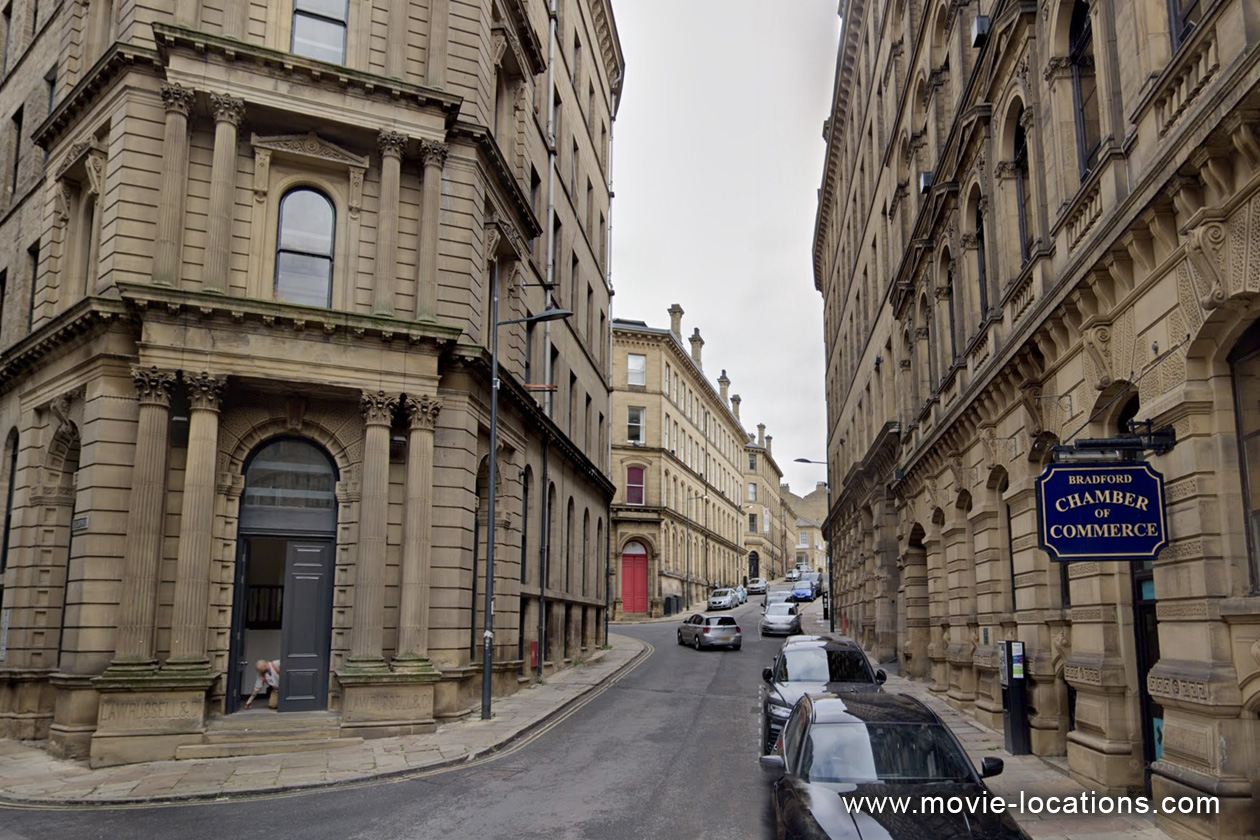
The bomb-ravaged cobbled streets of central 'Birmingham' visited by Tommy's sister, Ada Thorne (Sophie Rundle), who's now a local MP, are the historic area of Bradford called – ironically in this case – Little Germany. The buildings are actually beautifully preserved and all that apparent damage is set-dressing and digital manipulation.
The name comes from the German textile merchants, predominantly Jewish, who built their grand warehouses in the mid-19th century after European trade was disrupted by the Franco-Prussian War.
You might recognise the streets from another TV spin-off movie, the 2019 film of Downtown Abbey, when they stood in for the city of 'York' in the 1920s and as 'Moscow' in another TV favourite The Crown.
Now that Tommy is out of the business, the Blinders are being run with as much ruthless brutality as ever by Tommy's embittered son 'Duke' (Barry Keoghan), who is recruited by English Nazi agent Beckett (Tim Roth) to facilitate the distribution of the fake notes.

When Tommy is reluctantly persuaded to return to the fray and sort out 'Duke', he discovers him in the 'Garrison Tavern' pub. As in Series 6 of the TV series, the pub is no more than a frontage with the interior filmed in the Digbeth studio. The exterior location surrounded by those mighty pillars carrying railway the railway track is at the junction of Duke Street and Castle Street beneath the Castlefield Viaduct in Manchester's historic Castlefield district just west of Deansgate.
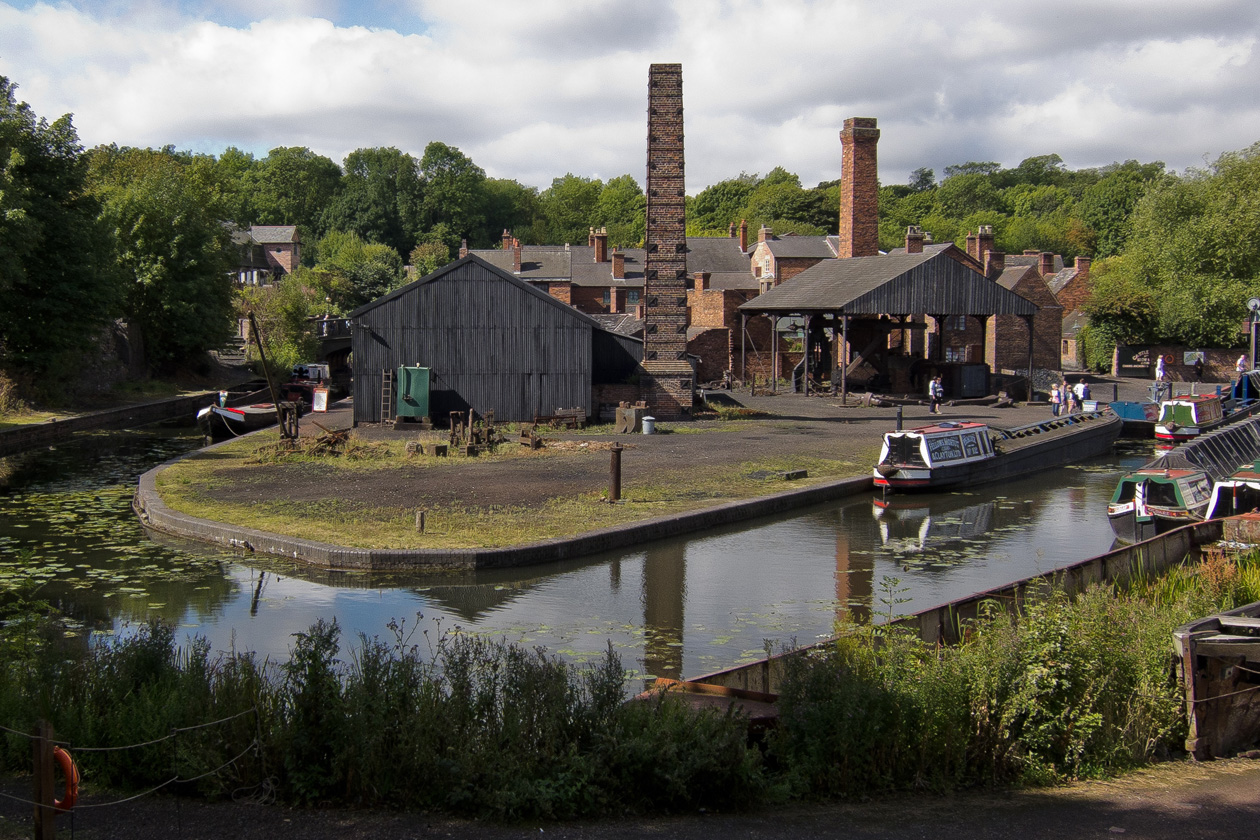
As ever, Tommy calls on Charlie Strong (Ned Dennehy) for assistance and, again as in the TV series, his canalside yard is the Black Country Museum, Discovery Way, Dudley in the West Midlands. Covering 26 acres of former industrial land partly reclaimed from a former railway goods yard, disused lime kilns and former coal pits, houses, shops, workshops and public buildings have been dismantled and rebuilt brick by brick here to create an early 20th-century village. The yard is an old anchor forge and boat dock on an arm of the Dudley Canal.
Not only is it open to visitors, it hosts frequent Peaky Blinders Nights for fans of the series.

Spoiler avoidance – following an unexpected death, Tommy goes after Beckett. After the agent manages to escape, Tommy takes a horse and rides slowly through the crowd in the ravaged city streets like a remorseless avenging angel. This time it is the real Birmingham, as Tommy rides along Margaret Street into Cornwall Street past the decorative brickwork and tiles of Birmingham School of Art.
Tommy's plan to thwart the German plot involves sailing barges through the old industrial canal network of the Midlands and the Northwest to 'Liverpool Docks', where the counterfeit notes are due to be collected.

The journey takes on an epic quality as the narrowboats progress slowly high above the countryside across the Pontcysyllte Aqueduct, Wrexham in central Wales. It's not only the longest aqueduct in Britain, it's the highest canal aqueduct in the world, and one of Britain’s UNESCO World Heritage Sites.
The countryside through which the narrowboats pass is Bumble Hole Nature Reserve at Windmill End in Dudley, before they're loaded up at the canalside at the Gas Street Basin near the Tap and Spile pub on the Birmingham Canal Old Line in Birmingham.
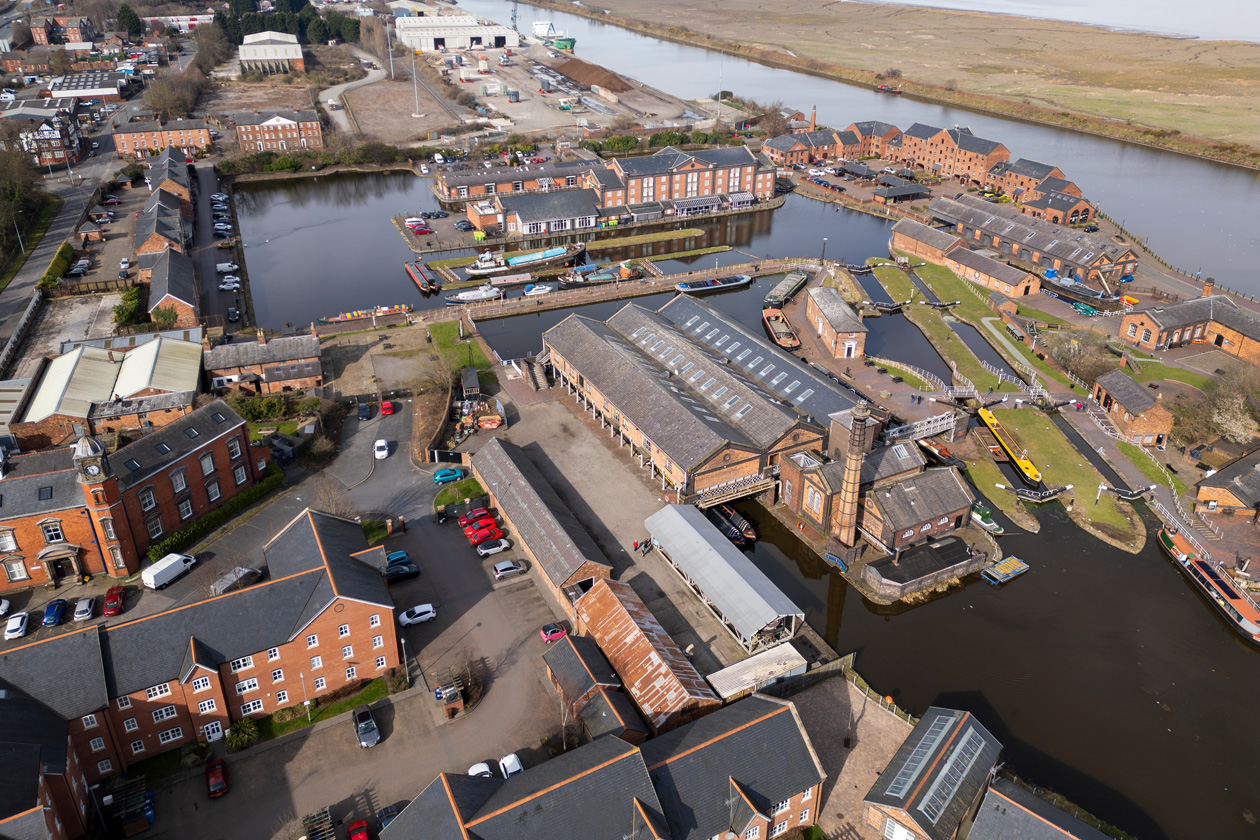
Again, for the final battle, during which all bets are off and all loyalties are questioned, two separate locations are blended together, this time to become Liverpool's 'Waterloo Dock'.
One is the National Waterways Museum, Ellesmere Port in Cheshire, a transport museum displaying the history of Britain's inland waterways, including canal boats, traditional clothing, painted canal decorative ware and tools, the museum stands at the northern end of the Shropshire Union Canal where it meets the Manchester Ship Canal.
Over in East Yorkshire, the big dockside set was constructed at the Port of Goole (ABP Goole) at the mouth of the Aire and Calder Navigation Canal where it feeds into the River Ouse – ande locals were givien advance warning of the sounds of gunfire and explosions during the night shoot.
Finally a couple of locations you may have seen mentioned that we haven't touched on. More industrial areas were filmed in the former Pilkington Watson Street Glass Works in St Helens on Merseyside before it was redeveloped.
And St George's Hall, St George's Square in central Liverpool? Blink and you'll miss it. In fact, if you look quite hard you still might miss it. The exterior of the hall is glimpsed when a German bomb falls on 'Birmingham'. From photos, it was obviously a spectacular night shoot but ended up being edited down to half a second of explosion and smoke. The Hall fared much better with screen time in 2016's Fantastic Beasts and Where to Find Them and Matt Reeves' 2022 The Batman.
⏏


